Most rooms I walk into already know what to do.
They do not need another clever framework.
They need someone who can return them to what they already know — and then hold the one thing until it moves.
That is harder than advice.
Advice feels generous. It fills the silence. It proves you were listening. It also lets the room stay spectators to their own business.
Facilitation plus accountability is different.
You ask the question that puts the answer back on the table.
You strip the fog until one constraint is named.
Then you refuse to let the week end without an owner, a date, and a definition of done.
Expertise, in that sense, is not having more answers than the room.
It is knowing which questions return the team to what they already know — then holding the one thing.
Advice is cheap. Holding is expensive.
Advice is abundant because it is low-cost for the giver and low-commitment for the receiver.
You can advise without owning the next thirty days.
You can advise without naming who will move the constraint.
You can advise and still leave the owner as the only person who can make the hard call — which is how the room quietly returns to default design.
I have watched rooms collect good advice the way a shelf collects binders.
Everyone nods.
Someone writes it down.
Next week the same bottleneck shows up wearing a different shirt.
The problem was never a shortage of ideas.
It was a shortage of holding.
Holding means: after the insight, someone is still responsible.
Holding means the conversation does not dissolve into “we should.”
Holding means the one thing survives contact with the calendar.
Without that, advice becomes theater. Smart theater. Still theater.
The answers were already there
When a team stalls, the instinct is to import certainty from outside — a consultant, a coach, a new playbook, another meeting.
Sometimes you need that.
More often the room already has the answer and cannot hear it over the noise of urgency, politics, and unfinished decisions.
Someone on the floor already knows which process is foggy.
Someone in leadership already knows which seat is carrying a constraint they cannot move.
Someone already knows which “yes” is feeding the owner’s indispensability.
The work is not inventing a third option.
The work is making the obvious option impossible to dodge.
That is facilitation.
Not facilitation as soft skills.
Facilitation as operating discipline: return the room to what it knows, name the constraint, and stop pretending twelve priorities are strategy.
Accountability is the other half
Facilitation without accountability is a workshop.
Accountability without facilitation is pressure without clarity.
Together they change the room.
Facilitation surfaces the real constraint.
Accountability assigns it.
Not “the team will improve quality.”
One name. One metric they can actually move. One date you will look again.
If you put variable pay or public heat on a constraint the person cannot control, you do not get accountability. You get fear and theater. Pay follows control. Judgment follows ownership. The room already knows when those are misaligned — they feel it in every scorecard that punishes the wrong seat.
So the job is not to yell louder.
It is to design the hold so the person being held can actually win.
What this looks like in practice
I am not writing this as a finished mountaintop. I am practicing it in rooms where the calendar is full and the temptation to “just tell them” is strong.
When I catch myself giving advice too early, I try a different sequence:
1. Ask the question that returns them to what they know.
Not “What should we do?” — that invites a brainstorm.
Better: “What already failed the same way last quarter?” or “If we could only fix one constraint this month, which one makes the rest easier?”
2. Name one thing.
If the room leaves with five priorities, it left with none. Fog loves lists. Clarity loves a single named constraint with an owner.
3. Define done in language a stranger could audit.
“Improve communication” is not done.
“By Friday, the handoff sheet includes X, and the miss rate is visible on the scorecard” is done.
4. Hold the calendar, not the vibe.
Accountability is not a speech. It is a follow-up that assumes the work was supposed to move. If it did not move, you do not restart the brainstorm. You ask what blocked the one thing.
That sequence sounds simple because it is.
Simple is not the same as easy. Easy would be another slide of advice.
Why operators resist this
Advice protects the advisor’s identity as the smartest person in the room.
Holding protects the business.
Advice also protects the owner. If you keep being the answer machine, you stay indispensable. That feels like leadership. It is often the Dependency Loop wearing a coach’s jacket: complexity increases, decisions still reach you, capacity shrinks, and redesign never quite fits.
Returning the answers to the room is a redesign move.
It says: the business should not need me to invent what the team already sees.
It should need me to make the seeing unavoidable — and the follow-through owned.
That is how you build leverage without abandoning standards.
Trust is not hoping they guess what you meant. Trust is them executing what you asked. Anticipation is a different job. Facilitation clarifies the ask. Accountability makes the ask real.
Three moves this week
If your meetings produce nods and not movement, try this:
1. Ban “we should” for seven days.
Replace it with a name, a date, and a definition of done. If you cannot name those three, you do not have a decision yet. You have a mood.
2. Ask one return question before you advise.
In the next stuck conversation, do not lead with your answer. Lead with the question that puts their answer back on the table. Write theirs down before you add yours.
3. Hold one thing publicly.
Pick a single constraint already known in the room. Put an owner on it. Put a date on it. Look again on that date without reopening the whole strategy. That is the difference between advice and an operating system.
The answers are already in the room more often than we want to admit.
Advice is what we offer when we are afraid to hold.
Facilitation is what returns the room to itself.
Accountability is what keeps the one thing from dissolving by Friday.
Expertise is knowing which questions return the team to what they already know — then holding the one thing until it moves.
Build your business. Keep your life.
Not by collecting more clever answers.
By designing rooms that can hear — and finish — the ones they already have.
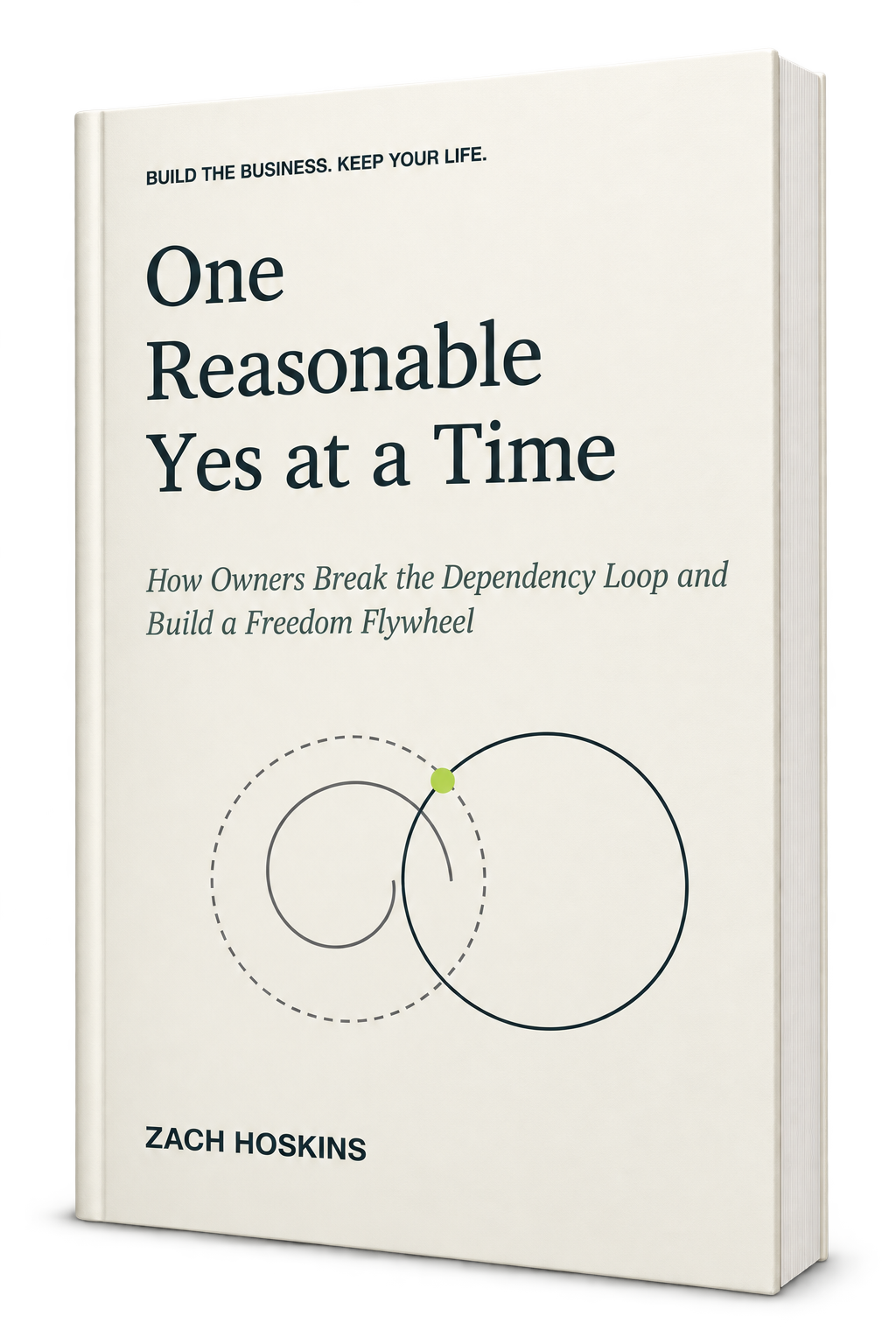
If this named something you have been living, start with the companion design: stop building the business around the owner by default. I wrote about that trap in You Become the Bottleneck One Reasonable Yes at a Time.
I write more of this on X and at theefficiencyconductor.com.